




We carry out one of the most sought-after procedures gently and effectively.

We are experts with over 11 years’ experience.
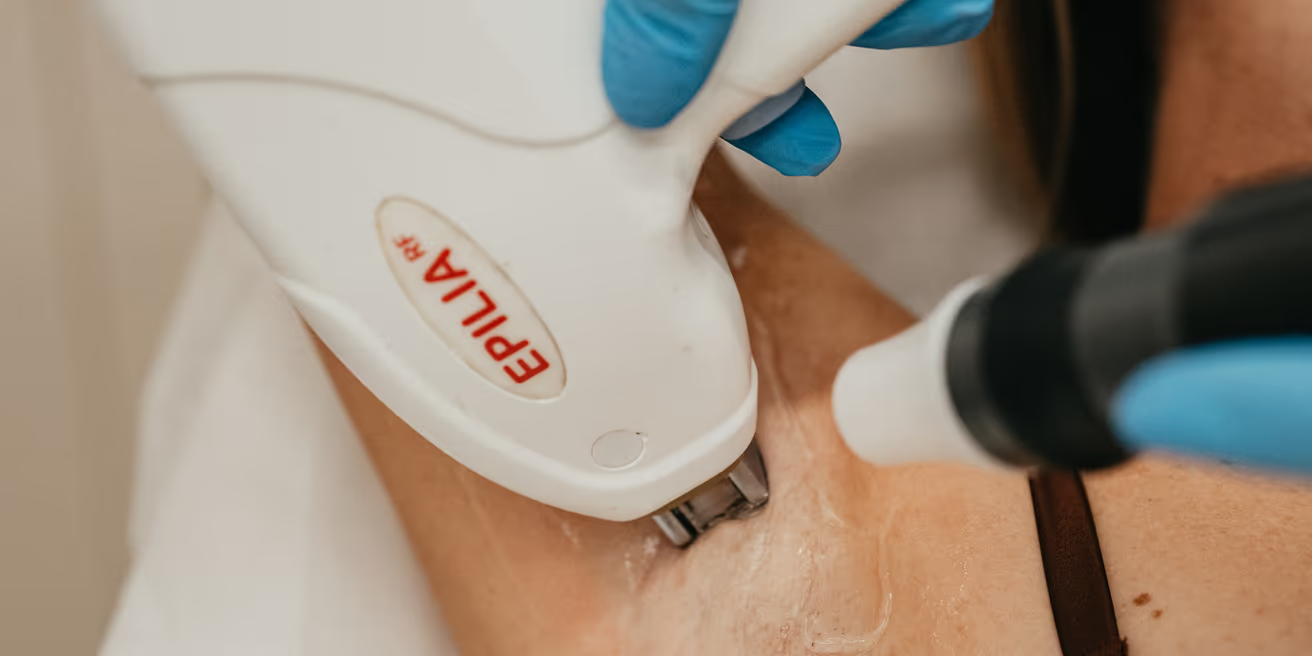
Pubic hair – some people don’t mind it, whilst others can’t even bear to look at it. Shaving or plucking it is time-consuming and often painful. However, laser hair removal for the intimate areas can rid you of these worries once and for all, without any pain.
Dealing with hair in intimate and hard-to-reach areas is a tedious and exhausting process. Leave it to us. We’ll discreetly remove hair from your genital area, groin and anal area – whether you’re having one or all three treatments at the same time.
Book a procedureWe carry out one of the most sought-after procedures gently and effectively.
Hair in areas visible around your swimwear can detract from your figure.
Removing hair from this area yourself is difficult and not at all pleasant. We can help with this too.
Get in touch with us and your unwanted hair will be a thing of the past!
Although this procedure is usually undertaken by women, there is nothing to prevent men from having it too. We carry out these procedures on patients of both sexes and of all ages. Sensitive skin is not an obstacle. Put yourself in the hands of a premium plastic surgery clinic.
The laser we use is one of the most effective, if not the most effective, methods of hair removal currently available. It combines two wavelengths, which means it can even tackle light-coloured hair.
During the treatment, the hair is completely destroyed, right down to the root. However, the treatment needs to be repeated around 6–7 times, as the device can only destroy hairs that are currently in the growth phase. The interval between individual sessions is approximately 4–10 weeks. Once the full course of treatment is complete, no hair will remain in the treated area.
The treatment also has certain contraindications, and we recommend that the following people do not undergo it: pregnant and breastfeeding women, people with diabetes, people with allergies or autoimmune diseases, people with epilepsy, people with a pacemaker, people with inflammation or infections at the treatment site, and people with cancer or tumours. There are other contraindications besides these main ones – we’d be happy to discuss them with you during a no-obligation consultation.